




| Quantity: | |
|---|---|
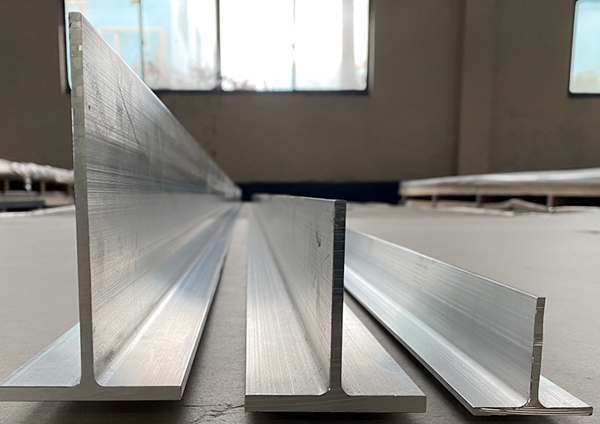
Marine-grade aluminum profiles are the most critical structural materials in shipbuilding, serving as the vessel's "skeleton" and "shell." Their quality directly impacts the hull's structural strength, safety, service life, and navigation performance. These specialized aluminum products feature high technological content and stringent quality requirements. Currently, our product range includes T-sections, cross aluminum, flat aluminum profiles, spherical flat aluminum profiles, spherical head aluminum profiles, spherical head T-sections, square tubes, anti-slip square tubes, angle aluminum profiles, round tubes, aluminum bars, square bars, channel aluminum profiles, I-beam aluminum profiles, fender and custom-shaped profiles. The key advantages are their high strength, excellent toughness, superior weldability, and corrosion resistance. Our aluminum profiles have been certified by internationally recognized authorities (BV, ABS, LR, DNV, RINA, CCS).
Different marine structures require different combinations of strength, profile geometry, and alloy temper. The following table provides a quick reference for our commonly supplied marine aluminium profile grades.
Alloy & Temper | Representative Materials / Profiles | Size | Typical Performance Requirements | Certifications Obtained | Applications |
|---|---|---|---|---|---|
6061-T5/T6 | Angle, flat bar, round tube, square tube, T profile, I profile | Tensile Strength ≥ 260 MPa; Yield Strength ≥ 240 MPa; Elongation ≥ 8% | CCS, BV, LR, DNV, ABS | Ship hull frames, stiffeners, supports | |
6082-T5/T6 | T profile, L angle, U channel, rectangular tube | Tensile Strength ≥ 290–310 MPa; Yield Strength ≥ 250–260 MPa; Elongation ≥ 8–10% | Ship structural components, vertical stiffeners, cross beams | ||
6005A-T5 | T profile, U channel, I profile, complex extruded profiles | Tensile Strength ≥ 260 MPa; Yield Strength ≥ 215 MPa | Large-section components, ship superstructures | ||
6063-T5/T6 | Round tube, square tube, U channel, handrail & stanchion profiles | Tensile Strength ≥ 260 MPa; Yield Strength ≥ 240 MPa; Elongation ≥ 8% | Handrails, stanchions, decorative structural components, cabin interior fittings | ||
5083-H111/H112 | Flat bar, angle, T profile | Tensile Strength ≥ 275 MPa; Yield Strength ≥ 125 MPa | Ship hull structures, marine components | ||
5086-H111/H112 | Flat bar, angle | Tensile Strength ≥ 240 MPa; Yield Strength ≥ 95 MPa | Ship hull structures, piping, offshore structural components |
Stable Mechanical Properties: Possessing specified strength, toughness, and ductility, it can withstand complex stresses such as high waves, cargo loads, and ice impacts, preventing hull breakage or deformation.
Excellent Low-Temperature Toughness: Especially in critical areas, the use of high-strength aluminium effectively resists brittle fracture in polar or low-temperature seas, ensuring the ship's safety in harsh environments.
Shipbuilding involves large-scale welding projects, and the quality of welds directly determines hull strength.
Specialized Composition Design: The chemical composition of marine profiles is optimized for easy welding.
High-Performance Welded Joints: After welding, the mechanical properties (especially toughness) of the heat-affected zone of the weld have a high degree of matching with the base material, effectively preventing weld cracks and defects and ensuring the integrity of the hull structure.
The aluminum alloy itself typically incorporates corrosion-resistant elements such as copper, nickel, chromium, and magnesium to enhance corrosion resistance.
Reduced Empty Ship Weight: By using high-strength aluminium alloys, the amount of material used can be reduced while maintaining the same structural strength, effectively reducing the ship's weight.
Increased Economic Efficiency: Reduced empty ship weight means more cargo can be loaded (increased deadweight), or fuel savings can be achieved with the same deadweight, significantly improving the ship's economic efficiency.
Our ship plates are certified by major classification societies (BV, ABS, LR, DNV, RINA, CCS), strictly adhering to the relevant regulations for ship construction. Although classification societies differ, their standards are internationally interchangeable, ensuring global recognition of material quality and facilitating shipbuilding, trading, and regulation.
Military vessels: warships, submarines, auxiliary vessels, etc.
Marine engineering equipment: offshore platforms, floating production storage and offloading (FPSO) vessels, engineering vessels, etc.
High-performance vessels: yachts, speedboats, etc. (often using special materials such as aluminum alloys).
We supply multiple alloy and temper options, including 6061-T5/T6, 6082-T5/T6, 6005A-T5, 6063-T5/T6, 5083-H111/H112, and 5086-H111/H112, allowing customers to select materials according to different marine structural requirements.
Standard and customized profiles are available, covering T profiles, I profiles, U channels, angles, flat bars, round tubes, square tubes, rectangular tubes, and complex extrusions.
Dimensions and cross-sectional designs can be customized according to customer drawings. This allows the profiles to be adapted to different ship structures, marine equipment, and project-specific installation requirements.
Marine aluminium profiles can be supplied with relevant classification certifications, including:
CCS | BV | LR | DNV | ABS
Certification requirements should be confirmed according to the specific alloy, profile, and project.
Customers can provide drawings and technical requirements for customized production. Alloy, temper, profile geometry, dimensions, mechanical requirements, and certification needs can be confirmed before production.
Looking for standard or customized marine grade aluminium profiles for your shipbuilding or marine engineering project?
Send us your profile drawing, alloy and temper, dimensions, quantity, application, and certification requirements. Our team can review your specifications and provide a customized quotation based on your project requirements.


