Views: 0 Author: Site Editor Publish Time: 2026-10-16 Origin: Site
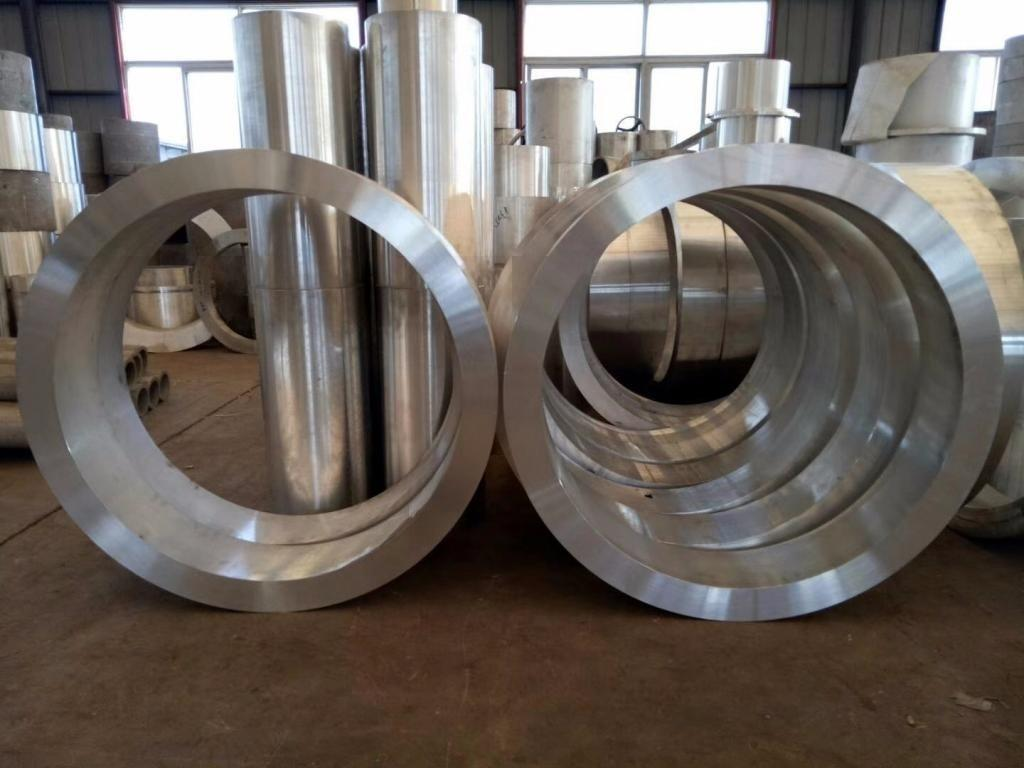
High-stress environments demand components capable of extreme endurance. Aerospace, defense, and heavy machinery rely on structural parts that absorb massive directional forces. When catastrophic failure is simply not an option, engineers turn to rolled and forged metal solutions. Traditional manufacturing methods often fall short in these brutal applications. Casting introduces severe porosity risks and hidden internal voids. Machining directly from solid plates leaves an interrupted grain structure. This dramatically reduces the overall fatigue life of the part. You need a highly engineered solution to handle these intense mechanical loads. A reliable aluminum forging ring provides the ultimate answer for structural integrity. Producing it requires precise control over three core pillars to guarantee field performance. First, manufacturers must optimize grain flow to accurately match the intended load path. Second, they must apply exact heat treatment protocols. This balances tensile strength and essential corrosion resistance. Finally, rigorous non-destructive inspection validates deep internal integrity. This engineered synergy ensures every single piece meets uncompromising safety standards.
When designing mission-critical components, engineers must systematically eliminate potential weak points. A forged profile directly addresses primary failure modes inherent in other manufacturing techniques. Welded rings often suffer from catastrophic seam failures. The heat-affected zone near the weld creates a natural, unavoidable stress riser. Machined plates expose short transverse grains to heavy surface stresses. This exposure frequently causes premature cracking under cyclical loading. Forging completely eliminates these severe risks. It creates a continuous, unbroken internal grain structure throughout the entire part diameter.
Weight reduction remains a critical objective across aerospace and defense sectors. Specifying an aluminum alloy forging ring meets these strict payload targets perfectly. Alloys such as 6061, 7075, and 2219 offer exceptional strength-to-weight ratios. They maintain massive load-bearing capacity while actively shedding unnecessary mass. Heavy machinery applications also benefit significantly from reduced rotational inertia.
We categorize production into two primary manufacturing methods. First, seamless rolled ring forging dominates large diameter requirements. A rolling mill expands the heated material radially. This action creates a perfectly round, continuous hoop ideally suited for turbine casings or bearing rings. Second, closed-die forging serves applications requiring highly complex cross-sections. Powerful hydraulic presses force the metal into intricate die cavities. This specific method significantly reduces downstream machining requirements.
The physical deformation process fundamentally changes the metal properties. Forging mechanically manipulates the heated aluminum billet. It strictly orients the grain flow along the intended load path. This specific alignment dramatically boosts the part's resistance to axial and radial stresses. Think of wood grain in a baseball bat. The wood is always strongest when external forces run parallel to its internal grain. The exact same metallurgical principle applies here.
We must actively mitigate anisotropy to ensure uniform performance. Anisotropy refers to material properties changing depending on the specific direction of measurement. Proper die design controls exactly how the hot metal flows. Strategic pre-form shaping prevents irregular grain orientations. If engineers ignore this step, the final ring might develop localized weak spots. Best practices dictate using advanced computer simulation software. Engineers map the material flow digitally before cutting any expensive steel dies. A common mistake is rushing the pre-form stage. This error inevitably leads to unpredictable mechanical properties in the field.
Thorough verification guarantees structural safety. You cannot merely trust the digital simulation alone. Manufacturers must perform destructive testing on first-article samples. Technicians physically slice the test ring and apply strong chemical etchants. This macro-etching process visually reveals the actual grain flow alignment. Engineers then compare these physical results against their initial CAD models. Any deviation requires immediate tooling adjustments.
Thermal processing ultimately dictates the final mechanical properties. The complete thermal cycle for an aluminum alloy forging ring involves three distinct stages. First, solution heat treating brings the metal to a specific high temperature. This step dissolves essential alloying elements into a uniform solid solution. Second, a rapid liquid quench aggressively locks these dissolved elements in place. Finally, artificial aging carefully controls microscopic particle precipitation. This final phase, known as precipitation hardening, massively boosts the overall yield strength.
Engineers must continuously evaluate temper trade-offs based on operating environments. Different applications demand different metallurgical priorities.
Common Aluminum Temper Specifications
| Temper Designation | Primary Engineering Benefit | Typical Industry Application | Performance Trade-off |
|---|---|---|---|
| T6 | Maximum ultimate tensile strength and peak yield strength. | General structural components and non-corrosive environments. | Lower overall resistance to stress-corrosion cracking (SCC). |
| T73 / T74 | Superior stress-corrosion cracking (SCC) resistance. | Aerospace bulkheads and harsh marine environments (7xxx series). | Slight reduction in peak tensile strength (roughly 10-15%). |
Managing internal residual stress is a critical post-quench step. The extreme temperature drop during the rapid water quench traps severe internal stresses. If left untreated, the metal will warp aggressively during final CNC machining. Mechanical stress relief provides a highly effective solution. Using a specialized cold compression technique permanently deforms the ring slightly. This action physically neutralizes internal tension. Achieving a TX52 temper ensures perfect dimensional stability on the machine shop floor.
High-performance hardware requires uncompromising validation procedures. Stringent quality assurance protocols protect end-users from catastrophic structural failures. Non-Destructive Testing (NDT) standards form the absolute backbone of this defense.
Dimensional and geometric tolerances heavily dictate machining readiness. Forged profiles are rarely shipped at exact net-shape. They always require calculated machining allowances. Engineers must predict complex thermal contraction accurately. They also strictly define acceptable out-of-roundness tolerances before final delivery. Common mistakes involve underestimating the necessary cleanup material. This ruins the part entirely during the first lathe pass.
Compliance and traceability remain strictly non-negotiable. The aerospace and defense sectors demand absolute, bulletproof paper trails. You must verify a supplier's AS9100 certification for robust quality management. Production facilities require active NADCAP accreditation for all heat treatment and NDT processes. Furthermore, comprehensive Material Test Reports (MTRs) must track the exact chemical composition. This documentation links the finished component back to the original raw billet.
Selecting the right manufacturing partner actively mitigates deep project risks. Technical buyers must assess supplier capabilities far beyond surface-level marketing brochures. Evaluating physical infrastructure ensures production reliability.
Use this capability checklist when evaluating a potential vendor:
Cost and volume realities often dictate the underlying supply chain strategy. Technical buyers should transparently address minimum order quantities (MOQs) early in initial negotiations. You must properly amortize initial tooling and setup costs against long-term unit pricing. Machined plates typically have very low setup costs but extremely high raw material waste. Forging completely flips this equation. It requires higher upfront investment but yields highly efficient long-run economics.
Lead time vulnerabilities can easily derail critical production schedules. Complex raw billet sourcing often introduces severe unpredictable delays. Outsourced heat-treating processes frequently cause significant logistics bottlenecks. Always evaluate a vendor's supply chain vertical integration carefully. A fully integrated supplier controls the entire manufacturing process strictly under one roof. This setup drastically reduces schedule risk and eliminates transportation delays between third-party subcontractors.
A successfully manufactured ring represents a highly engineered solution tailored for critical environments. Its long-term success depends entirely on the perfect synergy of expert metallurgy, precise thermal processing, and rigorous NDT validation. Cutting corners on any of these three distinct pillars actively risks catastrophic field failure.
Procurement and engineering teams should engage specialized suppliers extremely early in the design phase. Request detailed design for manufacturability (DFM) feedback long before locking in your CAD models. Leverage their deep metallurgical expertise for proper alloy and specific temper selection. By collaborating proactively, you optimize structural performance and streamline overall production. Reach out to a certified forging specialist today to request a comprehensive technical review or detailed quote for your next high-stress application.
A: A seamless rolled ring is formed by continuously rolling a pierced pre-form radially. This specific process is ideal for simple, large-diameter hoops. Closed-die forging forces the heated aluminum into a specially shaped cavity using immense pressure. This distinct method is preferred for rings requiring complex, near-net-shape cross-sections.
A: Engineers frequently specify 6061 for excellent weldability and high corrosion resistance. The 7075 alloy is actively chosen for its ultimate tensile strength in demanding applications. For aerospace components and high-temperature operating environments, 2014 and 2219 alloys provide exceptional overall performance and stability.
A: Improper quenching traps severe residual thermal stresses inside the metal. When CNC machining removes material, these hidden internal stresses suddenly release, causing the ring to severely warp. Specifying a stress-relieved temper, such as TX52 (cold compression), mechanically neutralizes these internal forces to ensure perfect dimensional stability.
A: Always demand a comprehensive First Article Inspection (FAI) report to verify strict dimensional accuracy. You must also collect NADCAP-certified NDT inspection reports (Ultrasonic and Penetrant). Finally, require official mill test certificates (MTRs) to guarantee exact chemical composition and mechanical properties from the raw billet.